
In-Person vs. Online Psychiatry in Maryland
Both formats can support meaningful psychiatric care. Compare privacy, technology, travel, clinical needs, medication follow-up, and what to confirm before scheduling.
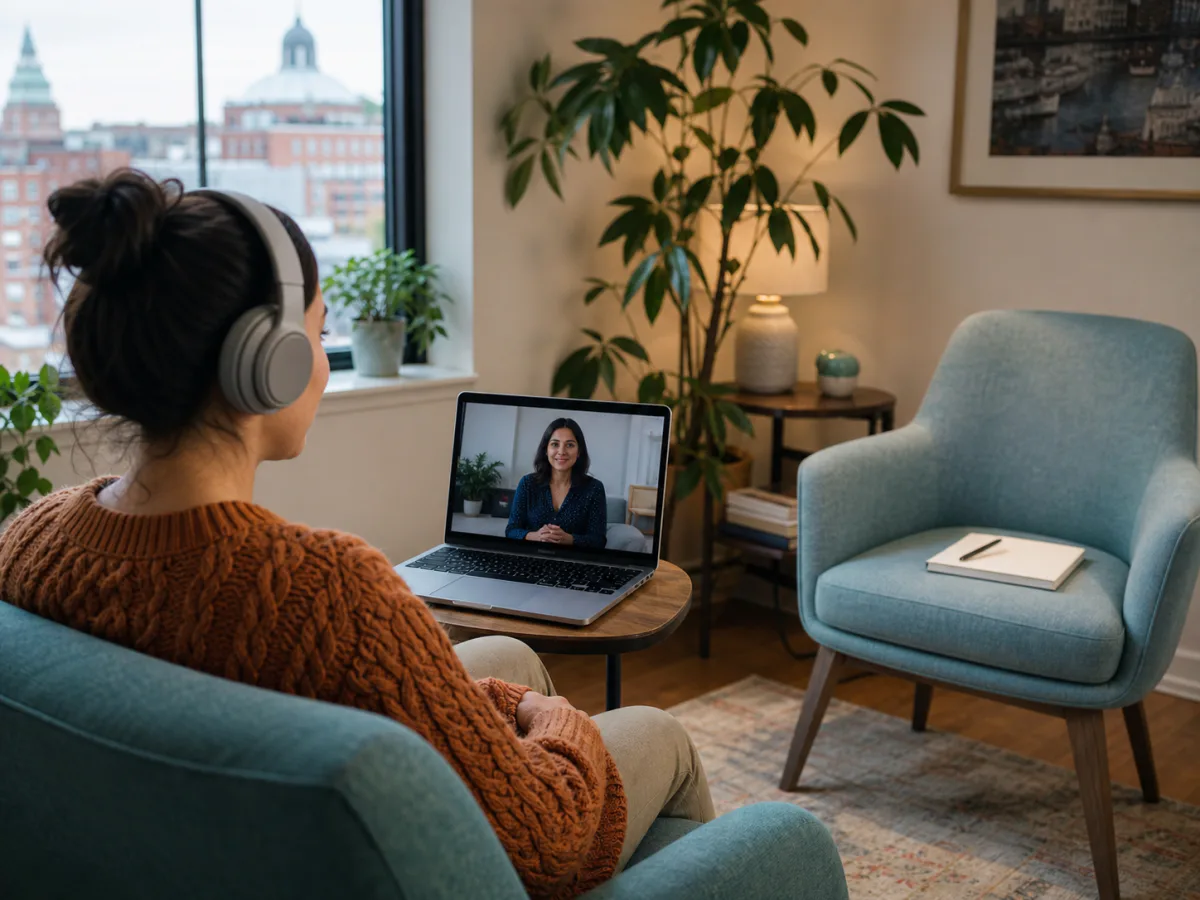
Is in-person or online psychiatry better?
Neither format is automatically better. Online psychiatry can reduce travel and make follow-up easier, while an office visit may be more appropriate when privacy, technology, physical assessment, testing, or safety needs make remote care difficult. The right choice depends on the patient, the service, and the clinician’s judgment.
Overcare provides telehealth for eligible Maryland patients age 16 and older when the requested service is available and online care is clinically appropriate. The scheduling team must still confirm the patient’s location, needs, provider availability, insurance information, and appointment format.
This guide can help you prepare for that conversation. It is general education and cannot determine whether telehealth or in-person care is appropriate for one person.
What stays the same in an online psychiatry visit?
A virtual appointment is still a clinical appointment. The provider may ask why you requested care, what has changed, how symptoms affect daily life, which medications and supplements you take, what treatment you have tried, and whether there are medical or safety concerns. You should have time to ask questions and understand the proposed next step.
The format does not remove the need for privacy, informed consent, accurate health information, or careful medication review. A provider may also request records, laboratory results, vital signs, pharmacy information, or follow-up with another clinician. Some of those steps can happen before or after a video visit; others may require an in-person appointment.
An online request does not guarantee a diagnosis, prescription, particular medication, or continuing telehealth treatment. The provider must first determine what can be addressed safely and appropriately through the available service.
When might online psychiatry be a practical choice?
Telehealth may be worth asking about when getting to Baltimore is difficult, travel would interrupt work or school, mobility is limited, or a patient prefers to speak from a familiar private space. It can also make some follow-up appointments easier to fit into a routine.
Convenience is useful only when the setting supports a real clinical conversation. The patient needs a reliable connection, a working camera and microphone when video is required, and enough privacy to discuss health history, medication, relationships, substance use, or safety without being overheard.
- You will be physically located in Maryland at the time of the appointment.
- You have a quiet place where you can speak openly for the full visit.
- Your device and internet connection are reliable enough for the scheduled format.
- The requested service is available by telehealth and the provider considers it appropriate.
- You understand what to do if the connection fails or the provider recommends in-person follow-up.
If another person will be in the room, tell the provider. A parent, guardian, caregiver, interpreter, or support person may be helpful, but the patient and clinician should be clear about consent and what can be discussed in front of that person.
When might an in-person psychiatry visit make more sense?
An office visit may be the better starting point when the clinician needs information that cannot be gathered reliably online, when a private virtual setting is unavailable, or when technology problems would keep the patient from participating fully. Some patients also find it easier to focus or build rapport in the same room as the clinician.
The need for an office visit is not a judgment about the seriousness or validity of a concern. It is a decision about what information and support are needed to provide appropriate care.
- The evaluation may require an in-person physical assessment, vital signs, testing, or observation.
- Medication decisions or monitoring require steps that cannot be completed remotely.
- The patient does not have a private location, suitable device, or dependable connection.
- Symptoms, safety concerns, confusion, intoxication, or another clinical issue make remote care unsuitable.
- The provider needs to coordinate an in-person service or a different level of care.
A clinician may also begin online and later recommend an office visit, or begin in person and use telehealth for appropriate follow-up. The appointment format can change as needs change.
Why does your location matter for telehealth in Maryland?
For telehealth, the patient’s physical location at the time of the visit matters. HHS advises providers to verify patient location before an appointment because professional licensing rules are state based. A Maryland home address does not answer the question if the patient is traveling in another state on the day of the visit.
Before scheduling or joining, tell the practice where you expect to be during the appointment. If travel plans change, contact the office instead of assuming the visit can proceed. The provider may need to reschedule, change the format, or confirm whether care is permitted from the new location.
Overcare Psychiatry & Therapy accepts appointment requests for patients age 16 and older. Patients younger than 16 are not accepted into Overcare programs, but the team can discuss referral assistance to other providers.
Can medication management happen online?
Some psychiatric evaluation and medication-management visits may be available through telehealth. A provider can review response, side effects, adherence, pharmacy information, and questions during a virtual appointment. That does not mean every medication can be started, changed, or monitored entirely online.
The clinician may need recent vital signs, laboratory work, records, an in-person assessment, or coordination with primary care. Federal and state prescribing rules can also change, and different medications carry different monitoring needs. The scheduling team can confirm the current appointment process; the clinician decides what is appropriate after evaluation.
Do not start, stop, share, or change a prescription because of general information in this article. Contact the clinician responsible for the medication, and use urgent or emergency services when a reaction or safety concern cannot wait.
Does insurance cover online and in-person psychiatry the same way?
Not always. Coverage can depend on the plan, provider network, service, place of service, age and eligibility rules, authorization requirements, and whether the appointment is delivered by video, phone, or in person. A telehealth benefit does not necessarily mean every provider or psychiatric service is covered virtually.
Ask the insurer about both the provider and the exact appointment type. Confirm any deductible, copayment, coinsurance, referral, or prior-authorization requirement. Insurance verification can report available benefit information, but it does not guarantee that a future claim will be paid.
How should you prepare for an online psychiatry appointment?
Use the instructions sent by the practice rather than a link from an unexpected message. Complete required forms through the approved workflow, test the device before the appointment, and keep the office number nearby in case you cannot connect.
- Choose a private, quiet Maryland location and avoid public Wi-Fi when possible.
- Charge the device, test the camera and microphone, and sign in early.
- Keep a medication list, pharmacy details, questions, and requested records nearby.
- Use headphones if they make the conversation more private.
- Do not join while driving, walking in public, or handling another task.
- Know the address of your current location in case the provider needs it during an emergency.
Do not send detailed symptoms, diagnoses, medication lists, insurance identifiers, or medical records through ordinary email, social media, or a general website message. Ask the team which secure method to use.
How should you prepare for an in-person psychiatry appointment?
Confirm the office address, arrival time, parking or transportation plan, identification, insurance information, and any forms or records requested before the visit. Bring an accurate medication list and a short note about the questions you most want to discuss.
Allow enough time to arrive without rushing. If a parent, guardian, interpreter, or support person will attend, ask the office whether they should be present for the full appointment or only part of it. For patients age 16 or 17, consent and guardian participation may need to be discussed before the visit.
How do you request in-person or online care from Overcare?
When requesting an appointment, indicate whether you prefer an office visit in Baltimore or want to ask about telehealth. The preference helps the intake team understand what you need, but it does not reserve or guarantee that format.
The team will review age eligibility, Maryland location for telehealth, the requested service, provider availability, insurance information, and whether another step is needed before scheduling. If online care is not appropriate for the request, the team can explain available in-person or referral options.
Official telehealth information
These government resources explain how behavioral telehealth can be used, why patient location matters, how to prepare, and how Maryland Medicaid describes telehealth coverage. Coverage and policy details can change, so confirm current requirements with the practice and insurer.
Telehealth and routine office visits are not emergency services
Do not wait for a routine psychiatry appointment during a medical or mental health emergency. Call 911 or go to the nearest emergency room.
For immediate emotional distress or suicide and crisis support in the United States, call or text 988. Website forms and routine appointment requests are not monitored as emergency services.
Frequently asked questions
Does Overcare provide online psychiatry in Maryland?
Does Overcare provide online psychiatry in Maryland?
Yes. Overcare provides telehealth for eligible Maryland patients age 16 and older when the requested service is available and online care is clinically appropriate. The team must confirm patient location, needs, provider availability, insurance information, and appointment format.
Is online psychiatry as thorough as an in-person visit?
Is online psychiatry as thorough as an in-person visit?
A virtual appointment can include a detailed psychiatric conversation, history review, medication review, safety assessment, and care planning. Some needs still require records, vital signs, laboratory work, testing, physical assessment, or an in-person visit.
Do I need to be in Maryland during an Overcare telehealth appointment?
Do I need to be in Maryland during an Overcare telehealth appointment?
Patients should expect to confirm their physical location at the time of the appointment. Contact the office before the visit if you will be outside Maryland, because state-based licensing and other requirements may affect whether the appointment can proceed.
Can a first psychiatry appointment be online?
Can a first psychiatry appointment be online?
A first visit may be available by telehealth for some eligible patients. The team and provider must review location, service fit, clinical needs, technology, safety, and other requirements before confirming the format.
Can medication management be provided through telehealth?
Can medication management be provided through telehealth?
Some medication-management visits may happen online when permitted and clinically appropriate. A provider may still require vital signs, laboratory work, records, an in-person assessment, or another step. A telehealth request does not guarantee a prescription or particular medication.
What if I prefer telehealth but the provider recommends an office visit?
What if I prefer telehealth but the provider recommends an office visit?
Ask why an in-person visit is recommended and what information or assessment is needed. The team can explain available office options or whether another service or referral is more appropriate. The appointment format may change as clinical needs change.